Building trust in retirement savings
Honest Dollar needed to grow its customer base, but the app was intimidating and riddled with financial jargon. As Design Lead at Accomplice, I led the complete redesign from research through implementation, transforming it into an accessible platform for freelancers and small business employees. The redesign increased onboarding completion by 34%, boosted average contributions by 22%, and reduced support calls about 'how retirement works' by 67%.
Company
Honest Dollar
Year
2018
Role
Lead Product Designer
Timeline
2 months
01 CHALLENGE
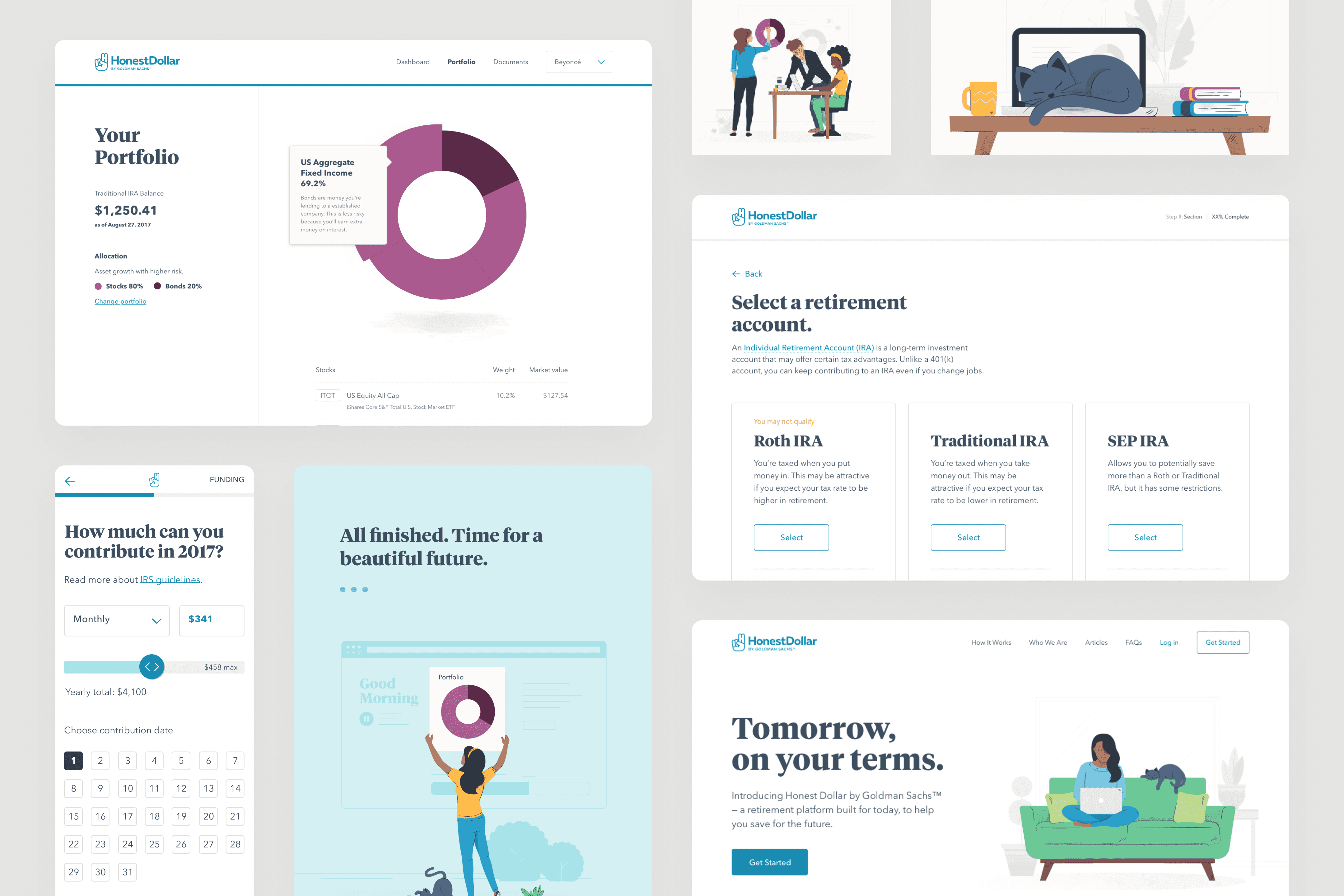
Transforming a product to drive business growth
Honest Dollar needed to grow its customer base in a crowded retirement market, but the product was working against them. The app was intimidating, riddled with financial jargon, and had no clear target audience. High abandonment rates signaled deeper problems—people gave up not because they didn't want to save, but because the experience made them feel overwhelmed and uncertain.
After Goldman Sachs acquired Honest Dollar, the challenge became clear: transform the product to reach freelancers, self-employed workers, and small business employees without corporate 401(k)s. This wasn't just about fixing screens—it was about positioning the company for sustained growth while building trust with people who had been ignored by traditional financial services.
02 RESEARCH
Understanding first-time savers
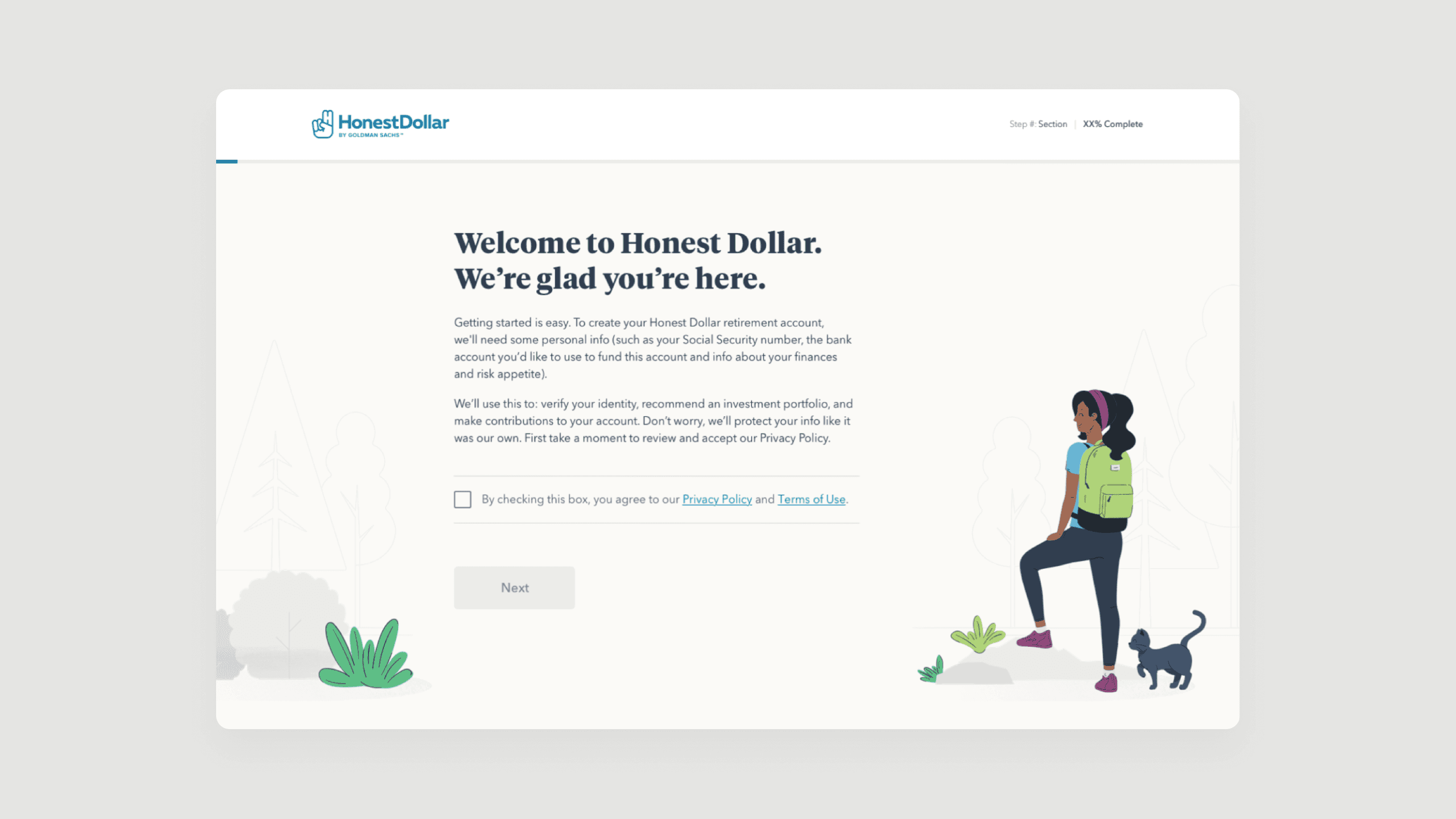
I embedded my team in Honest Dollar's daily operations. We joined standups, planning sessions, and acquisition discussions. This let us move from insight to execution immediately and influence decisions beyond design.
Through interviews with 47 small business employees, I found the core problem: retirement felt impossibly distant. People in their 20s and 30s couldn't connect today's sacrifice to a benefit 40 years away. Traditional financial services made this worse with jargon, complex charts, and intimidating language.
The insight that changed everything: people needed to see retirement as freedom, not a spreadsheet. They wanted simple language, clear visuals, and reassurance that small contributions mattered. This reframe shaped every design decision that followed.
03 SOLUTION
Building a foundation for trust
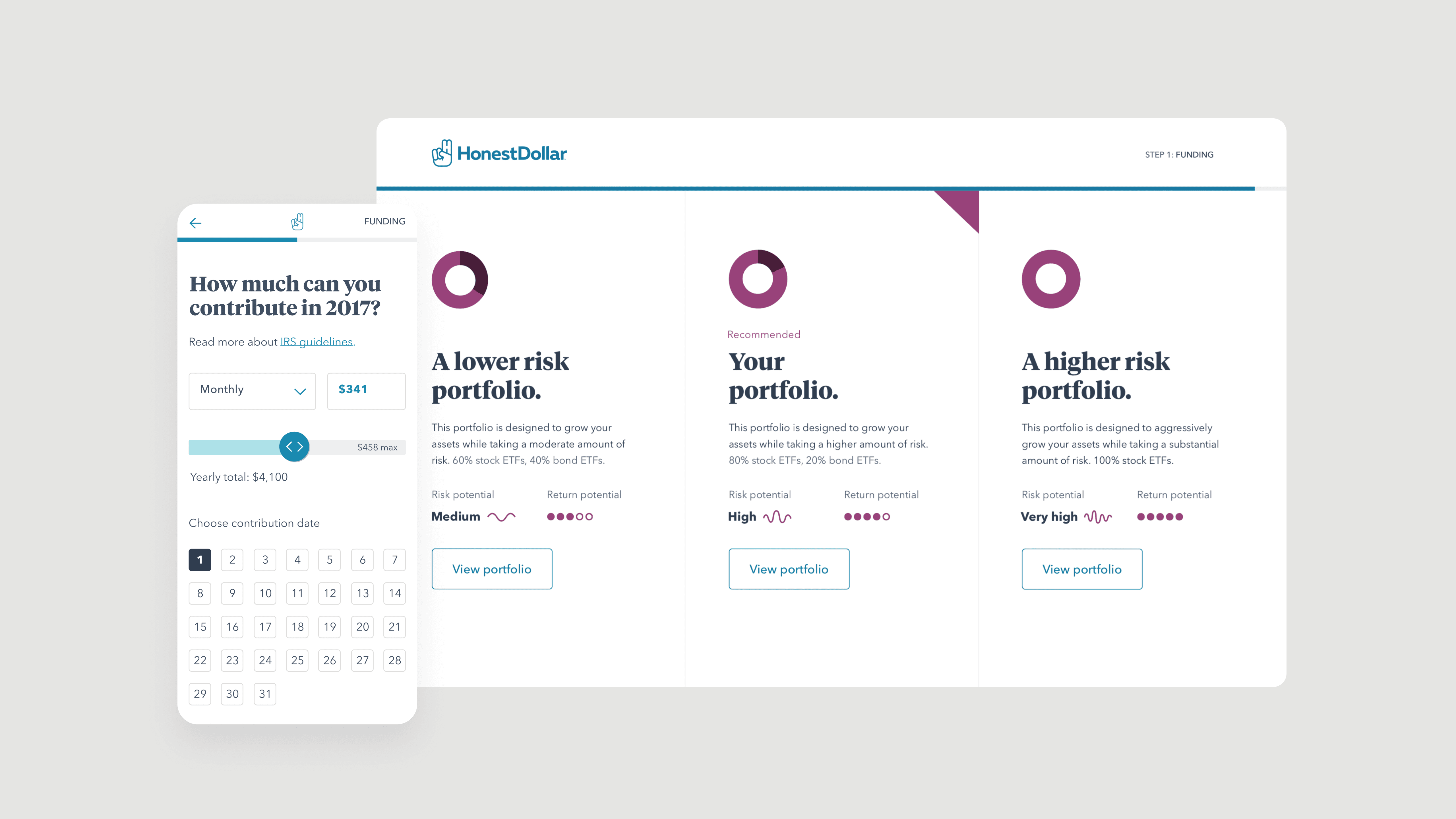
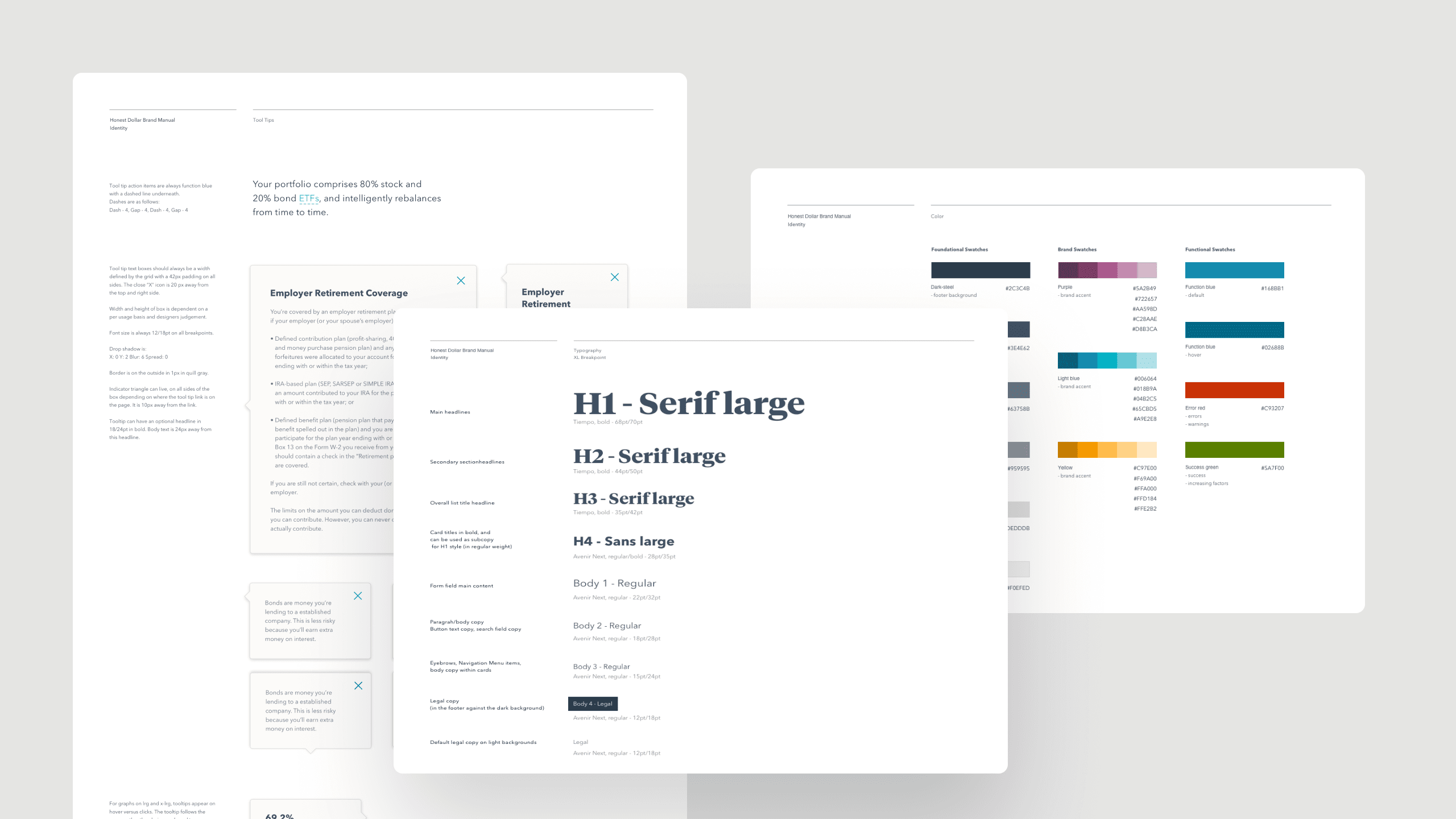
I started with systems, not screens. Before redesigning any flows, I established the foundational systems that would ensure consistency and trust across every experience. I defined design processes that integrated with Goldman Sachs workflows, established design principles that guided every product decision, and created a feature prioritization framework based on trust-building impact.
Design System
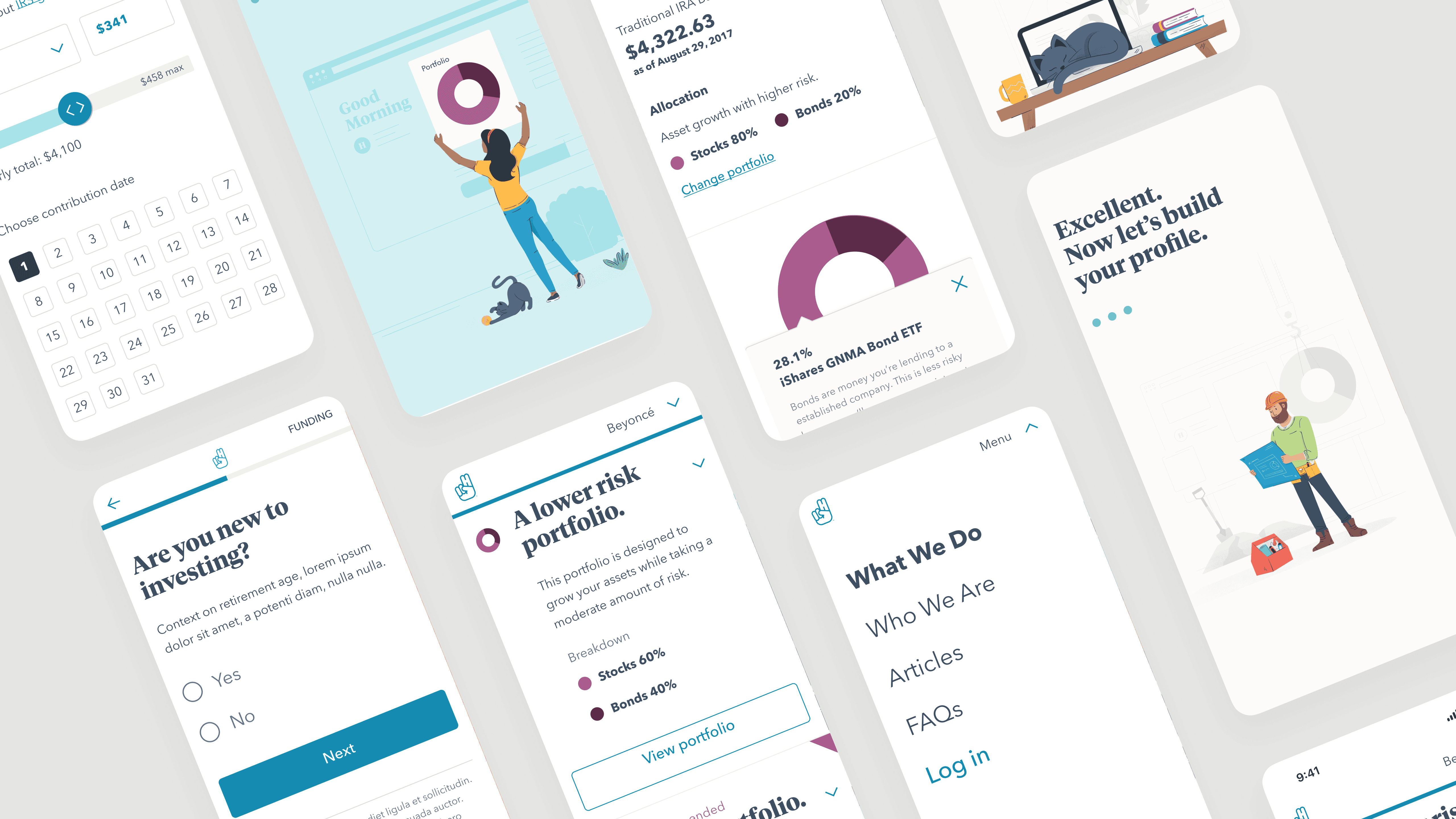
Working with my team, I built a comprehensive component library emphasizing clarity over corporate formality—typography and color systems, buttons and forms, navigation patterns, and data visualizations. This wasn't just for efficiency; it was strategic. Every component needed to build confidence, not create friction.
Voice & Content Strategy
I developed content principles that transformed how we communicated. "Beneficiary" became "Who gets this money if something happens to you?" "Contribution limits" became "The IRS sets a limit on how much you can save tax-free each year." Plain language wasn't about dumbing things down—it was about respecting that most people aren't financial experts.
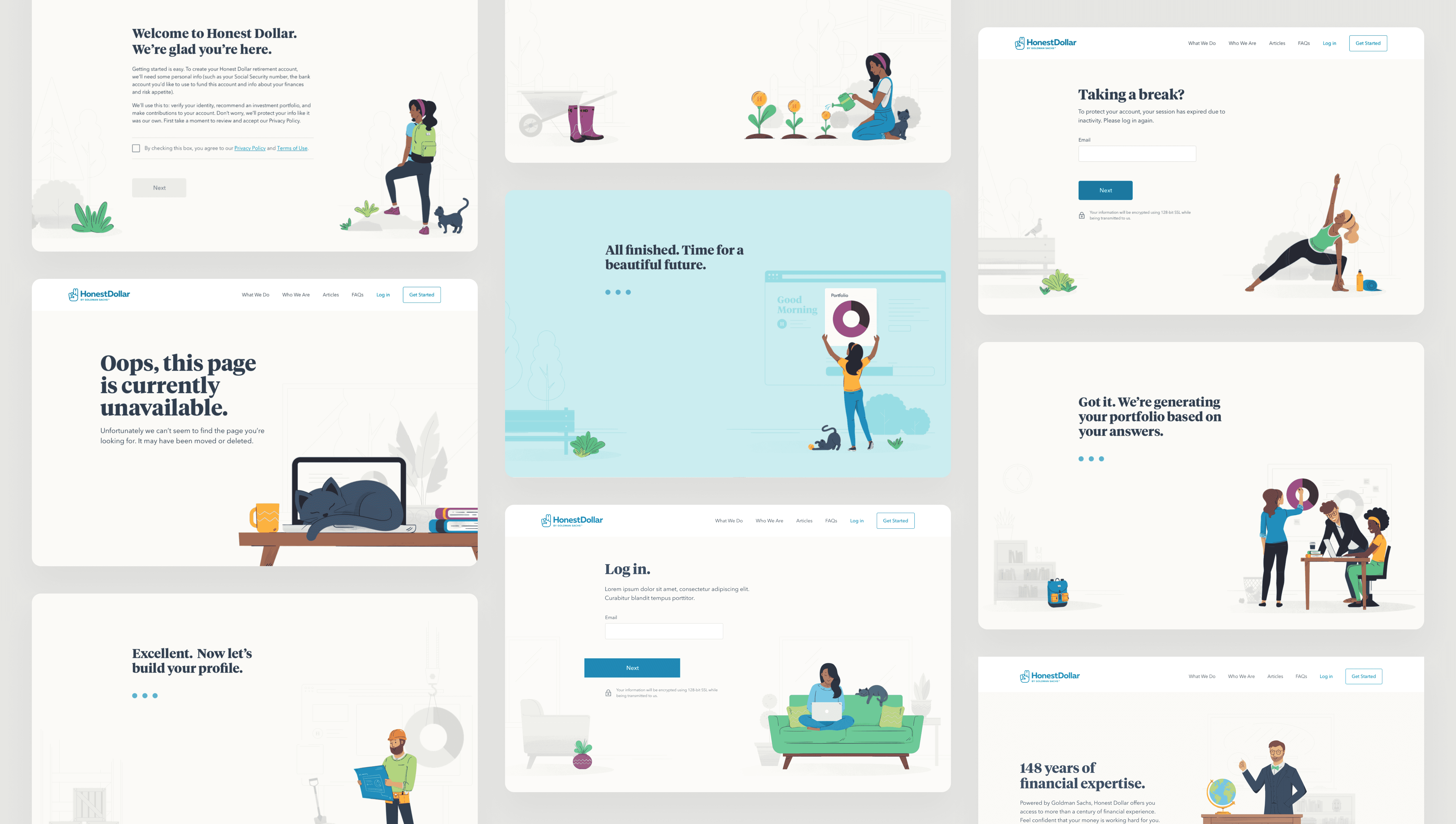
Illustration System
I art directed custom illustrations showing real people in everyday situations. A person hiking with their cat. Someone working from their couch. A construction worker. A yoga instructor. These visuals made retirement planning feel accessible by showing it's for everyone, not just Wall Street types.
Onboarding Redesign
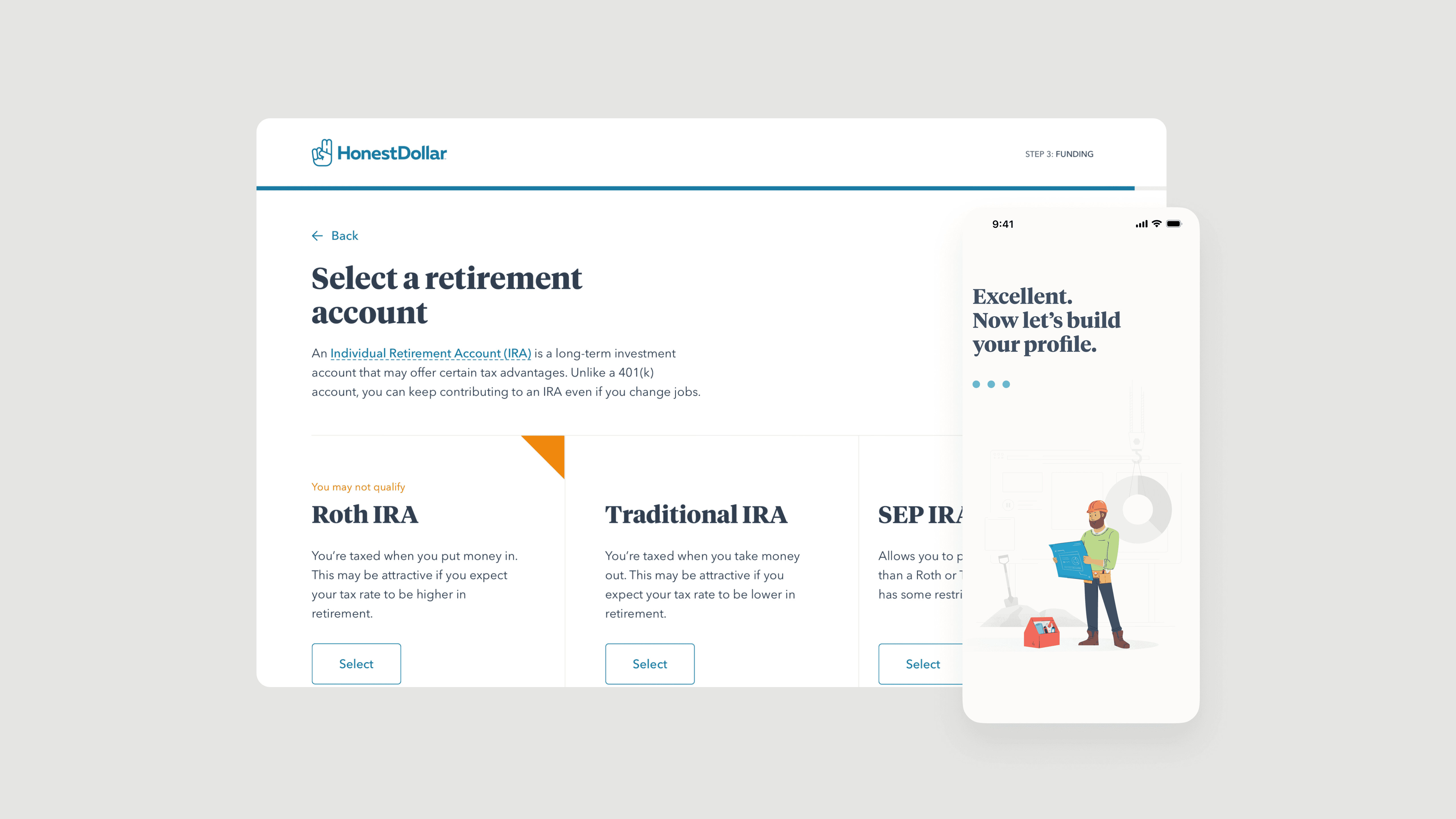
I cut 8 steps down to 3. The new flow explained retirement in simple terms, showed exactly how much came out of each paycheck, and used illustrations to make the process feel human. Progressive disclosure presented one decision at a time with clear explanations. Celebration moments after each section kept momentum going. "Why we're asking" explanations built trust around data collection. The flow felt achievable instead of overwhelming. New users could complete setup in under 2 minutes.
Dashboard Transformation
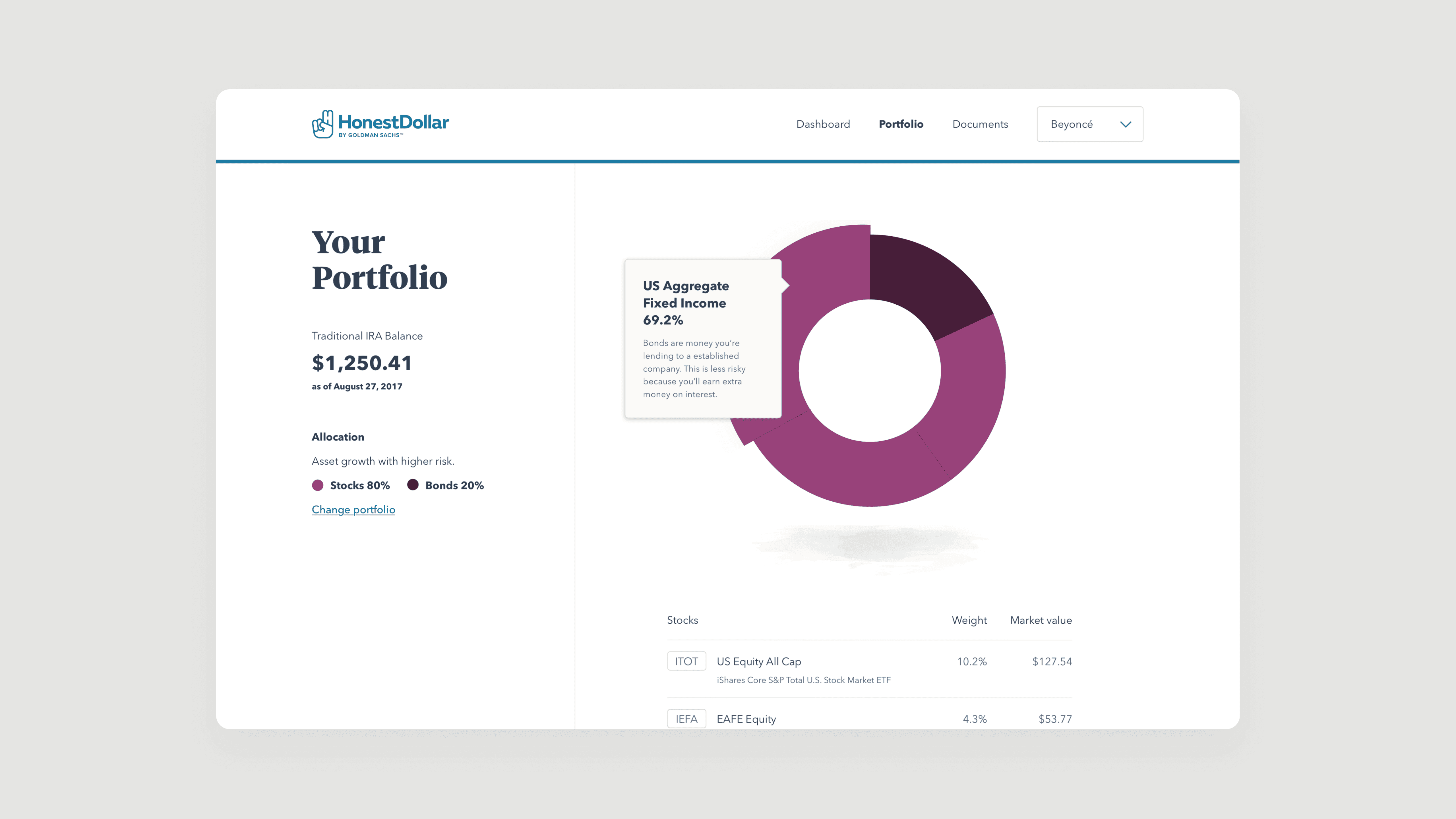
I replaced dense financial tables with a simple view showing current savings, projected retirement age, and one clear action to take next. The design used familiar metaphors—progress bars, not portfolio allocations—to help first-time savers understand where they stood. Interactive tooltips provided education in context. Retirement projections were transparent about assumptions. Contribution management worked intuitively across devices.
Connecting Acquisition to Engagement
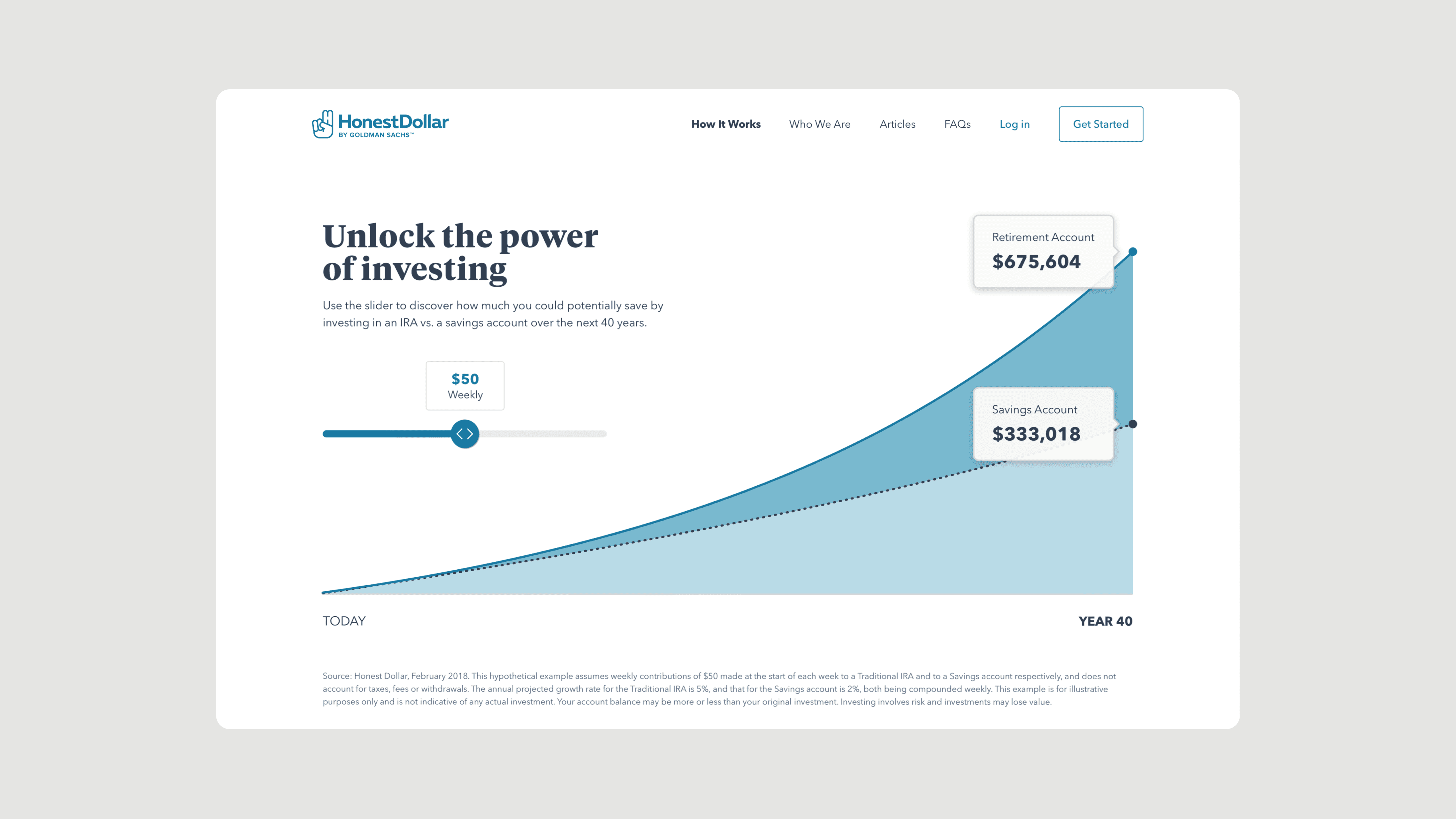
I redesigned the site to focus on education over sales pressure. Interactive calculators helped users understand compound growth. Clear value propositions addressed common objections. The goal was building trust before asking for signup.
The work extended beyond the product. I designed sales materials for small business owners, simplified the partner onboarding process, and created a visual system that carried through every touchpoint from acquisition to daily engagement.
04 impact
Driving acquisition and sustained growth
The redesigned product and strategic positioning helped Honest Dollar get acquired by Goldman Sachs in 2016. The embedded partnership model proved so effective that we continued evolving the product within Goldman's ecosystem through 2019.
Onboarding completion rates jumped 34%. Average contribution amounts increased 22%. Support calls about "how retirement works" dropped 67%. Long-term engagement improved, suggesting the trust we built at signup carried through. Monthly active users grew 45% in the first quarter after launch.
The design system and processes became the foundation for continued Goldman Sachs product development. Pitch materials and partnership strategies opened distribution channels through freelancing organizations. The trust-focused approach influenced how Goldman Sachs approached other consumer products. The scalable foundation meant new features could ship without requiring redesigns.
05 REFLECTION
Embed where it matters
Biggest lesson: the best design work happens when you're in the room where decisions get made. By participating in daily standups and strategic planning, I could act on research insights immediately, influence product roadmap, and see how design decisions cascaded through the organization.
Building trust through design enabled sales partnerships, supported acquisition negotiations, and created the foundation for sustained growth. This approach—deep partnership, strategic influence, and systematic thinking—became the model I bring to every product leadership role. Complex problems need simple solutions that scale.